Welcome to CSIROpedia
CSIRO scientists and engineers have contributed to the success and wellbeing of Australia and the world through their innovations and discoveries.
Find out more about CSIROpedia.

CSIROpedia: innovation shaping Australia

CSIROpedia provides an exciting new look into the discoveries and innovations by CSIRO scientists and engineers.
For over 80 years, CSIRO has been helping Australia and the world through science. We work with our partners on a vast array of research into space, energy, health, climate change, manufacturing, materials, minerals, agriculture, the environment and information and communication technology.
Through CSIROpedia you can find out about CSIRO's new UltraBattery™, the anti-flu drug, Relenza®, or the latest in Wi-Fi technology that is making a difference to people's lives. You can learn how science has contributed over the years to the nation's wellbeing and prosperity or read about the true life stories of our researchers and their inspirational moments that led to eventual success.
Conceived, compiled and edited by Colin Ward, a former Deputy Chief and CSIRO Fellow, this collection will continue to grow documenting important milestones in CSIRO's history. Learn more about CSIRO and some of our greatest achievements.
If you have any of this material in either your Divisional or personal collections, contact us.
Featured Achievement - Hendra virus identification

In September 1994 an outbreak of acute respiratory disease occurred in a stable in the Brisbane suburb of Hendra. Twenty one horses became infected, 13 of them fatally. Alarmingly, the disease also spread to two people and one of them, the well known racehorse trainer Vic Rail, died following a severe influenza-like illness.
The novel symptoms and rapid spread of the disease and its appearance in both horses and man brought together teams of scientists and veterinarians at the CSIRO Australian Animal Health Laboratory and the Queensland Department of Primary Industry. All known exotic infectious diseases, such as African horse sickness, were excluded by tests at AAHL and within a month a new virus was isolated and diagnostic procedures to identify it were established.
The virus was initially called equine morbillivirus, but later renamed Hendra virus after the suburb where the outbreak occurred. Since the first outbreak there have been 12 clusters of Hendra virus infection recorded in horses with seven people infected four of whom have died. A subsequent lethal outbreak at Mackay in Queensland revealed that the virus was able to cause both respiratory and encephalitic disease.
A search for the animal reservoir host for this newly described disease revealed that all four species of flying fox found in Australia could harbour the virus without ill effect.
Recently featured achievements
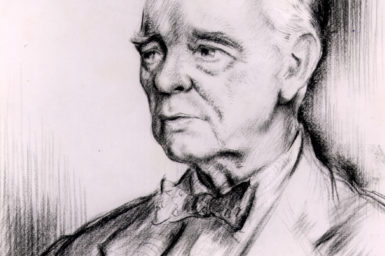
Featured Achiever - James Arthur Prescott
In 2001 Simon Winchester wrote his book ‘The Map That Changed The World”. It described the work of one man William Smith who travelled all over England documenting the layers of rock beneath his feet. Australia had a similar pioneer James Arthur Prescott who produced the first Soil Map of Australia, 1944.
James Arthur Prescott was born on 7 October 1890 at Bolton, Lancashire, England. He came to Australia to the University of Adelaide in 1924 and joined CSIRO in 1929. In 1926 Prescott has suggested to David Rivett the setting up of a Soil Investigation Section under his leadership at the Waite Institute. This was implemented in July 1927 and Prescott was appointed Chief of the CSIR Division of Soils in 1929.
His classification and mapping of the soils of Australia and his direction of detailed soil surveys of strategically chosen areas together with his climatological techniques for determining the availability of soil moisture, provided the best practical parameters for the use and conservation of Australian soils.
He was elected a Fellow of the Royal Society of London in 1951, for his fundamental pedological researches and his pioneering work in climatology and in 1954 became a Foundation Fellow of the Australian Academy of Science in 1954.